Parent Masterclass

10 Evidence-Based Habits for Raising Resilient, Bilingual Kids

A comprehensive parent guide grounded in validated child psychology from Japan (Mimamoru, Tokkatsu, Hansei), Korea (Nunchi), France, and Harvard. Screen-free routines, public calmness, Darija immersion, and restorative sleep.

For Modern Parents & Diaspora Families

Moving Beyond the Tablet: Building Deep Internal Imagination

When children listen to audio stories in their heritage language, their brain constructs vibrant mental worlds. Combining Japanese non-interference (Mimamoru) with warm Moroccan storytelling fosters genuine autonomy and cultural pride.

✓ Japanese & Global Methods✓ Zero Screen Dependency✓ Moroccan Darija
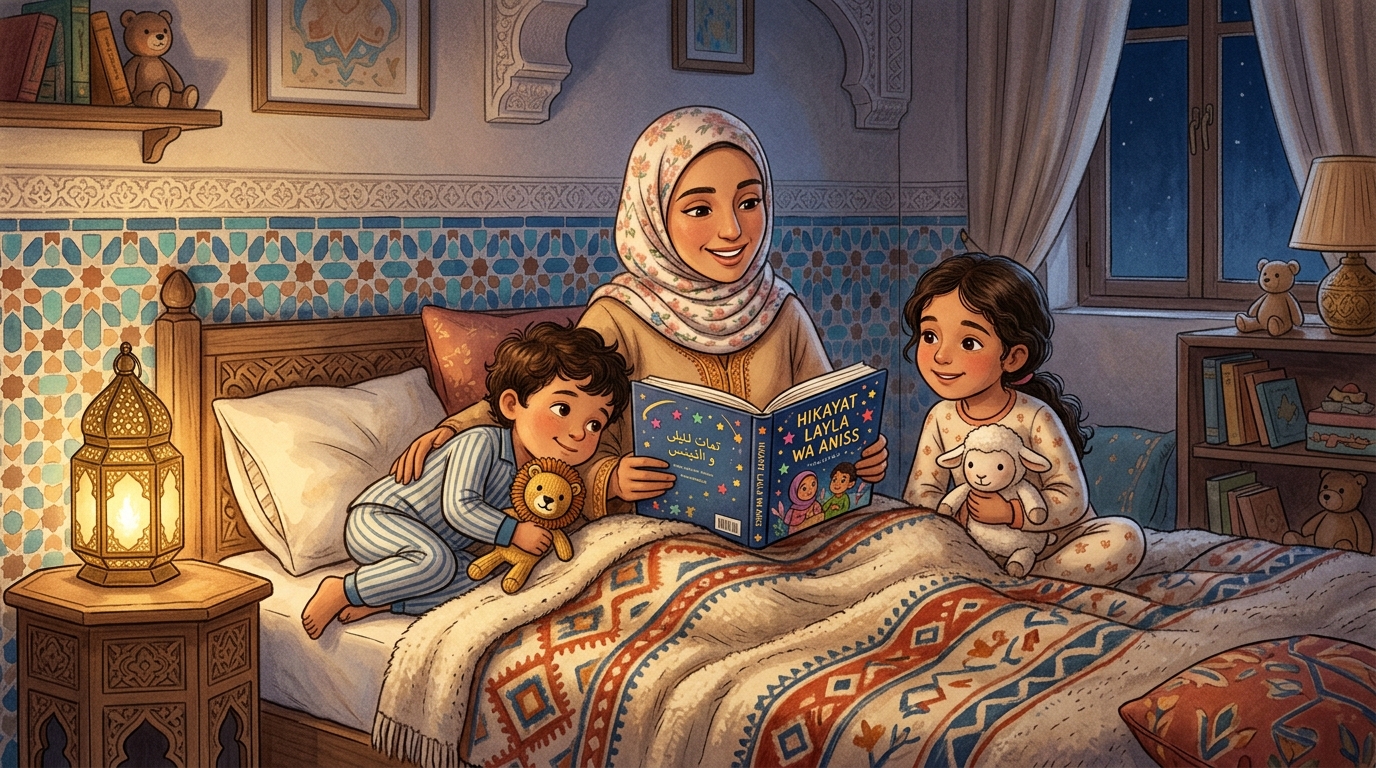
Moroccan mother reading bedtime stories to children

The 10 Golden Articles

Click into any article below or download the print-ready handbook for offline reading.

ARTICLE 01Validated Basis: French INSERM & Japanese Habituation Science (Shitsuke)

The Architecture of Daily Rhythms: Why Predictable Sensory Cycles Anchor the Developing Brain

💡 Core Takeaway: Children do not possess adult internal clocks; they orient safety and emotional calm through consistent sensory sequences (Shitsuke), not timestamps.

The Biological Mechanism

Young brains experience intense cognitive fatigue when forced to constantly anticipate what comes next. INSERM and Japanese developmental studies demonstrate that cortisol levels drop dramatically when daily transitions follow immutable sensory milestones (dimming lights, warm tea/milk, an opening audio melody), engaging the parasympathetic nervous system automatically.

Actionable Parent Protocol

  • Anchor Sequences over Rigid Timestamps: Replace "be ready by 8:00 PM" with an unmistakable 3-step physical sequence: (1) Pack toys into the evening basket, (2) Wash hands with warm water, (3) Start the bedtime audio story.
  • Dim overhead LEDs 60 minutes before bedtime: Blue light from overhead bulbs suppresses melatonin by up to 88% in children (double the adult rate). Switch to warm, low-standing floor lamps.

ARTICLE 02Validated Basis: Japanese "Mimamoru" (Intentional Non-Interference) & Russian Play Theory

The "Boredom Muscle" & Mimamoru: Why Stepping Back Builds Real Problem-Solving

💡 Core Takeaway: Boredom is not an emergency for parents to solve; it is the neurological discomfort that precedes creative self-organization.

The Biological Mechanism

The Japanese pedagogical concept of Mimamoru (見守る - watchful, benevolent non-interference) proves that when adults hold back from immediately entertaining or solving a child's mild frustration, the prefrontal cortex develops autonomous cognitive strategies. If a parent rushes in with a screen the moment a child says "I'm bored", the internal narrative engine turns off.

Actionable Parent Protocol

  • The 10-Minute Mimamoru Rule: When your child complains of boredom, resist offering an iPad or instant activity. Say warmly: "I know you feel bored right now. Your brain is getting ready to discover something great." Maintain a warm visual presence without taking over.
  • Open-Ended Creation Kits: Keep cardboard boxes, clothespins, masking tape, and plain paper accessible instead of single-purpose battery-operated toys.
ARTICLE 03Validated Basis: Korean "Nunchi" (Situational Awareness) & Spatial Psychology

The Public Space Playbook: Training Situational Awareness in Cars, Planes, and Restaurants

💡 Core Takeaway: Meltdowns in public spaces stem from sensory overload and lack of tactile purpose, not defiance.

The Biological Mechanism

Korean developmental pedagogy emphasizes Nunchi (눈치)—the art of assessing environmental atmosphere and attuning behavior. In public settings (restaurants, doctor clinics, trains), children handed a video screen dissociate completely; when the screen is removed, the sudden sensory shock causes a rebound tantrum. Cultivating active situational observation keeps kids calm and socially attuned.

Actionable Parent Protocol

  • Car & Travel Audio Immersion: Play immersive Moroccan folklore audio stories (like Qisati) during road trips. Audio stimulates the visual cortex internally without causing car sickness or screen dependence.
  • The "Restaurant Detective" Game: Give children a Nunchi observation mission: "Find 3 people wearing hats" or "Spot something made of brass". Provide a pocket notebook with two crayons.
  • Waiting Room Micro-Challenges: Practice whispered counting rhythms, silent finger games, or joint word associations ("I say Camel, you say Desert").
Kids engaged during travel listening to audio stories
ARTICLE 04Validated Basis: Harvard Center on the Developing Child & Indian Panchatantra Narrative Pedagogy

Igniting the Reading Spark: Dialogic Narration & Story Immersion

💡 Core Takeaway: Children do not fall in love with reading through letter decoding; they fall in love with the emotional connection of shared stories.

The Biological Mechanism

Harvard developmental research shows that "Dialogic Reading"—turning storytelling into an active back-and-forth dialogue—increases language comprehension by 300% compared to passive recitation. In ancient Panchatantra traditions, moral tales were open deliberations, not lectures.

Actionable Parent Protocol

  • Use the CROWD Technique: Ask Completion prompts, Recall questions ("Why did the baker laugh?"), Open-ended questions, Wh-prompts, and Distancing connections to real life.
  • Pair Audio with Physical Books: Let them listen to expressive audio narrations while flipping illustrated pages to build strong audio-visual phonological pathways.
ARTICLE 05Validated Basis: McGill University & INALCO France (Heritage Language Acquisition)

The Diaspora Darija Blueprint: Teaching Heritage Dialects Without Pressure

💡 Core Takeaway: A heritage dialect cannot be taught like a school subject with vocabulary drills; it must live as the language of warmth, humor, and security.

The Biological Mechanism

Children in diaspora environments reject their heritage language when it is used exclusively for reprimands or academic stress. To build fluent comprehension, the dialect must be associated with engaging fiction, warmth, laughter, and bedtime rituals.

Actionable Parent Protocol

  • OPOL / OPOS Strategy: Apply One Parent, One Language or One Place, One Setting (bedtime stories, dinner table, or Sunday mornings exclusively in Darija).
  • Audio Bedtime Immersion: Hearing native Moroccan pronunciation, culturally rich vocabulary (dyaf, souk, khobz d-dar, hkayat), and soothing cadence every night creates effortless phonemic memory without accent barriers.
  • Zero-Correction Validation: If your child replies in English or French with a mixed Darija word, do not criticize. Simply repeat their idea warmly using the correct Darija phrase.
ARTICLE 06Validated Basis: Japanese "Hansei" (Restorative Reflection) & Françoise Dolto Pedagogy

De-escalating Big Emotions: Restorative Self-Reflection (Hansei) Over Punitive Timeouts

💡 Core Takeaway: During a tantrum, the prefrontal cortex is offline. You cannot reason with an amygdala in full alarm; you must co-regulate and reflect restoratively.

The Biological Mechanism

Japanese developmental psychologists utilize Hansei (反省 - calm restorative reflection) rather than isolating timeouts. Isolating a crying child triggers abandonment panic; shouting escalates danger signals. Co-regulating first, then guiding a 2-minute restorative debrief builds permanent emotional self-regulation.

Actionable Parent Protocol

  • The 3-Step Co-Regulation Sequence: (1) Lower your physical body to eye level, (2) Slow your breathing (children synchronize with parental heart rates), (3) Name the emotion: "You are very angry because it was time to stop playing. I understand. I am right here."
  • The 2-Minute Hansei Debrief: Once calm returns, ask two gentle restorative questions: "What can we do differently next time?" and "How can we fix what broke?".
ARTICLE 07Validated Basis: East Asian "Lao Dong" (Practical Life Mastery) & Japanese "Tokkatsu"

Autonomy Through Micro-Chores: Cultivating Real Responsibility from Age 2

💡 Core Takeaway: Children do not want to be passive spectators; they possess an innate psychological drive to be useful contributors to the household.

The Biological Mechanism

In Japanese (Tokkatsu) and Chinese (Lao Dong 劳动) early education, children prepare tea, wipe tables, and arrange shoes from age 3. This builds executive function, spatial motor planning, and high self-esteem. When parents do everything for their kids, it inadvertently communicates that the child is incapable.

Actionable Parent Protocol

  • Age 2–3: Putting laundry in the basket, matching socks, wiping spills with a small damp cloth.
  • Age 4–6: Setting the dinner table (unbreakable plates), watering plants, packing their own schoolbag.
  • Frame Tasks as Privileges: Say "You are big enough to help me carry the bread" rather than making chores a punitive assignment.
ARTICLE 08Validated Basis: AAP & WHO Screen Time Guidelines

The Screen Detox Protocol: Transitioning from Dopamine Spikes to Acoustic Calms

💡 Core Takeaway: Fast-paced video screens produce rapid dopamine spikes followed by acute withdrawal irritability; audio storytelling preserves imagination and resting calm.

The Biological Mechanism

Rapid visual cuts overstimulate the ventral visual stream, bypassing the child's internal imaginative construction. In contrast, audio storytelling requires the brain to generate internal mental imagery, exercising deep listening comprehension and working memory without addictive retinal fatigue.

Actionable Parent Protocol

  • Implement the "Digital Sunset": No illuminated screens 90 minutes before bedtime.
  • Audio-First Bedtime Routine: Place the smartphone or smart speaker face-down across the room and let the child drift off listening to calm, calibrated acoustic narrations.
ARTICLE 09Validated Basis: Japanese "Omoiyari" (Empathy for Elders) & Moroccan Oral Traditions

The Intergenerational Anchor: Transmitting Wisdom & Roots Through Grandparents

💡 Core Takeaway: Children who know their family history and listen to elders show 40% higher emotional resilience during adolescent transitions.

The Biological Mechanism

Multi-generational psychology proves that children who possess a strong sense of ancestral lineage develop higher self-concept and Omoiyari (思いやり - deep altruistic empathy). In Moroccan and Mediterranean traditions, the grandfather (Jaddi) and grandmother (Lalla) are living libraries of proverbs, humor, and resilience.

Actionable Parent Protocol

  • Weekly "Elder Story Sessions": Set a recurring 15-minute phone or video call where grandparents recount a memory from their childhood ("How did you go to school when you were 7?").
  • Moroccan Proverbs in Daily Moments: Use short proverbs (Amtal Maghribiya) like "Qatrat b qatra kayhmel l-wad" (drop by drop the river swells) to teach patience organically.
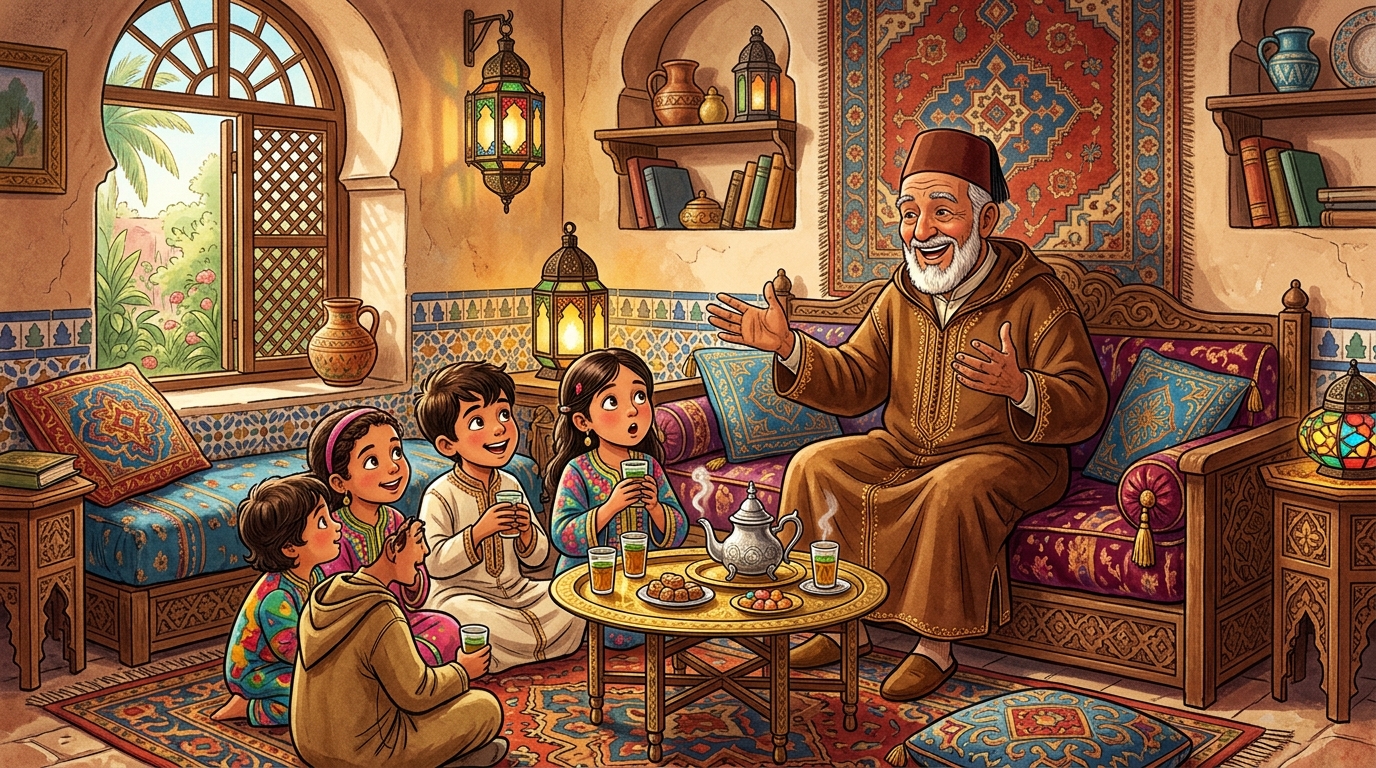
Grandparent telling traditional stories to grandchildren
ARTICLE 10Validated Basis: Sleep Endocrinology & Circadian Neurobiology

The Evening Wind-Down Physiology: Nutrition, Sensory Calming & Deep Sleep

💡 Core Takeaway: High-quality sleep is not a switch you flip at 8:30 PM; it is a physiological cascade that begins at dinner.

The Biological Mechanism

Late sugary snacks and high-fructose drinks trigger insulin and cortisol spikes that wake children during their first REM cycle. Furthermore, sudden silences can startle light sleepers.

Actionable Parent Protocol

  • The Calming Evening Snack: Offer complex carbohydrates with magnesium and tryptophan (e.g., a warm glass of milk with a date, or whole grain toast with almond butter) 45 minutes before bed.
  • Calibrated Acoustic Pacing: Bedtime audio should be paced at 60–80 words per minute to match resting heart rate, gradually easing the child from active beta brainwaves into theta relaxation.
Free Printable Parent Resource Library

Download All 4 Science-Backed Parenting Kits (PDF)

Print-ready handbooks formatted in full-width A4 with exact dialogues, Moroccan Darija glossaries, and habit trackers.

MASTER HANDBOOK

10 Evidence-Based Habits Guide

Full 10-article publication with neuroscience mechanisms, Japanese Mimamoru & Hansei protocols, age breakdowns, and exact dialogue scripts.

4.3 MB • Print-Ready📥 Download PDF
SCREEN-FREE KIT

Travel & Public Space Survival Kit

The ultimate screen-free kit for car road trips, flights, restaurants (Korean Nunchi games), and waiting rooms with Bento snack protocols.

514 KB • Print-Ready📥 Download PDF
HABIT TRACKER

Bedtime Routine & 30-Day Star Chart

Interactive printable bedtime wall chart with 30 reward star boxes, 4-step sensory evening sequences, and sleep hygiene rules.

399 KB • Printable Chart📥 Download PDF
HERITAGE DICTIONARY

100 Essential Darija Bedtime Words

Bilingual Moroccan Darija glossary with phonetic transcriptions, Arabic script, translations, and bedtime usage examples.

295 KB • Bilingual Cheat-Sheet📥 Download PDF

Need Other Languages?

All 4 kits are also available in French and Arabic. You can switch languages using the buttons below: